The Universe At Your Fingertips Activity: Picture an Astronomer

Introduction

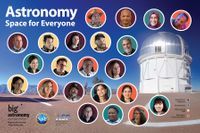
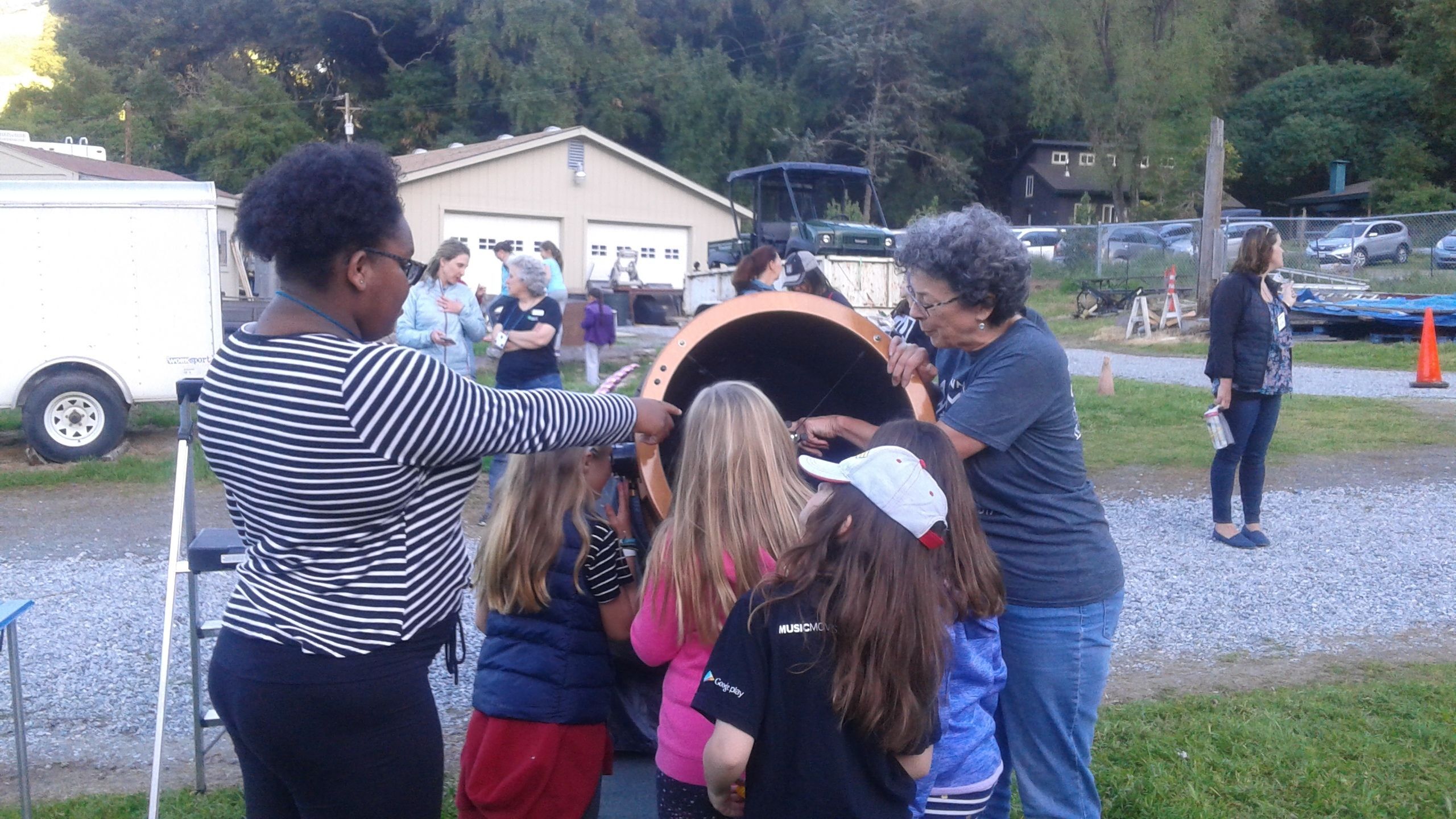
The media and our past experiences have shaped and created our expectations of people in various careers. Astronomers are often typecast as middle-aged, white, "nerdy" males by students and adults alike. However, astronomy is carried out by men and women in every country and by people young and old. This activity is a wonderful way to call attention to, and discuss, our preconceptions about who "can" be an astronomer.

(c) This activity was written by Alan Friedman (New York Hall of Science) and Andrew Fraknoi (Foothill College).
Copyright © 1995, Astronomical Society of the Pacific, 390 Ashton Ave., San Francisco, CA 94112. This activity may be reproduced for nonprofit purposes.

Activity Description

AstronomerBefore an astronomy unit or the first visit by an astronomer to your classroom, it can be instructive to have the students picture what an astronomer looks like and then discuss their assumptions. You might begin by reading them the following paragraph:

Close your eyes and picture this scene. It is the end of a long night at the observatory and the astronomer is closing up as the first rays of dawn are seen on the horizon. The astronomer is tired and ready for a good day's sleep. Now focus in on the astronomer, coming toward you on the road that comes from the observatory. Get a good close look at the astronomer, rubbing tired eyes. Draw a picture (or for older students - get a clear mental image) of what the astronomer looks like.

Note that this paragraph carefully omits any hint about the gender, age, or race of the astronomer. After students have made their own picture (as elaborately or as simply as time allows), have them compare and discuss the different pictures they came up with. In the past, there has been a tendency for participants of all ages to draw scientists as middle-aged white men. If your students also show such a tendency, this gives you an opportunity to discuss who became an astronomer in the past, and how the opportunities have expanded today and some (but by no means all) of the societal barriers have fallen.

Goals and Tips

1. Help students look at their assumptions and stereotypes about who might be an astronomer.

2. Encourage class discussion about scientists.

Tips and Suggestions

Preparation

Materials

Paper and a pencil or crayons for each student.

Background

Why do we have stereotypes about what an astronomer looks like? The reason is obvious: there really are fewer women and minorities working in astronomy - and in all the physical sciences. In the past, there were active barriers that filtered out people of a certain race or gender. For example, two decades ago, the observing proposals of women astronomers were refused at some observatories because "there were no restrooms or sleeping quarters for women". Many of those discriminatory barriers have been broken down, and now women and minorities account for a growing fraction of astronomy graduate students. Unfortunately, this reversal is beginning at a time when there are few jobs for new Ph.D.'s.

Addtional background information and online resources are available in the "Extensions" section for this activity.

Extending the Activity

1. Have students discuss the images of astronomers (or scientists in general) in the media. What gender, race, or age are the astronomers they may have seen in the movies or on TV? Have any of them seen astronomers in the newspaper or on the TV news? What kind of news or stories about astronomy have the students read or seen recently? Is it good for our country that newspapers and TV feature a lot more information about sports stars and movie stars than the real stars?

2. Have students research what preparation is required to become an astronomer. Some frequently asked questions about becoming an astronomer are posted online by the National Optical Astronomy Observatories. An excellent booklet on "A Career in Astronomy" is available from:

The American Astronomical Society
2000 Florida Ave. NW, #400
Washington, DC 20009

3. Have students report on what it is like to do astronomy today. Reports can be orally or in writing, individually or as a team. Your students may be surprised by what they find. For example, much astronomy can be done during the day; many astronomers no longer work at the telescope in an open (and cold) dome, but rather sit comfortably in a heated control room at a computer console; and many astronomers never come near a telescope at all, concentrating instead on creating or refining astronomical theories. As an alternative, you can assign each group a different astronomer whose life and work they can research and report to the class about. A reading list on 20th century astronomers and their work is included in the Resources & Bibliographies section of the Universe at Your Fingertips.

4. Use this activity as preparation for a visit from a local astronomer to your classroom. Be sure the students do the activity before the astronomer comes. During the visit, the astronomer might begin by talking a bit about how he or she first became interested in astronomy. After the visit, give students an opportunity to talk about how the astronomer was similar or different from the mental picture they had before the visit.

5. Try the Astro-Kids Puzzle

Additional background information and online resources

Women in Astronomy: An Introductory Bibliography

From the ASP Mercury magazine: There are about 15 African-American professional astronomers in the United States. Not 15 percent, fifteen. Latinos and Native Americans are similarly underrepresented. Those who make it not only must run the usual gauntlet of school, college, graduate school, and the job market; they must jump extra hurdles that can include poverty, discrimination, isolation, expectations of failure, and the burden of "representing" their ethnic group to their profession and their profession to their ethnic group.

Read more in this Mercury magazine editorial.

Online Resources

The Women's Program Committee at Harvard University has published a 16 page, illustrated guide that highlights the careers of a dozen women involved with astronomy. The brochure is free to students, teachers, guidance councelors and parents.

Michigan Electronic Library: Women and Minorities in the Sciences

University of Chicago: Women and Minorities in the Sciences

Astro-Kids Puzzle

Which kid do you think will grow up to be an astronomer?

Randi Cohen Neal Turner Andrew MacFadyen
Kim-Vy Tran Geoff Bryden Anouk Shambrook
Zo Webster Isabel Hawkins

Answer

They ALL did!!

Randi Cohen

Graduate Student Researcher, Lick Observatory, UC Santa Cruz

Randi writes: "When I was in third grade, I didn't know what I wanted to be. I thought maybe a writer because I spent lots of time reading children's books from my library. One day I picked up "Dragonsong", a book that was really science fiction but had been put in the children's section by mistake. I loved it. It made me start thinking about what life on another planet might really be like."

Neal Turner

Graduate Student Researcher, Lick Observatory, UC Santa Cruz

Neal writes: "[As a kid] I liked to watch wild birds and animals and the sky at night, and I also liked to build electronic kits. I decided to become an astronomer because that way I could use electronic instruments and computers to study the natural world."

Andrew MacFadyen

Graduate Student Researcher, Lick Observatory, UC Santa Cruz

Andrew writes: "I knew I was interested in astronomy from about the 5th or 6th grade. My 6th grade teacher was a science nut and had lots of cool science projects for us to do. I got a sense of wonder about the vastness of the universe and became interested in space and the stars."

Kim-Vy Tran

Graduate Student Researcher, Lick Observatory, UC Santa Cruz

Vy writes: "I wanted to be a veternarian as a kid. Guess that didn't happen!"

Geoff Bryden

Graduate Student Researcher, Lick Observatory, UC Santa Cruz

Geoff writes: "When I was young I always liked animals and I wanted to be a vet. Only later, in high school, did I start thinking that I wanted to be an astronomer."

Anouk Shambrook

Graduate Student Researcher, Lick Observatory, UC Santa Cruz

Anouk writes: "When I was a kid, I wanted to be the President of the United States. I never had a science kit, I never took apart the toaster, and I never knew any constellations. But I was really curious and my brother used to hate me because I was always asking questions. Luckily, my mom and dad kept telling me it was ok to ask questions. Now I get to do it all the time. Astronomy is cool!"

Zo Webster

Graduate Student Researcher, Lick Observatory, UC Santa Cruz

Zo writes: "My earliest recollection of what I wanted to be when I grew up is that I wanted to be a stewardess. When I was little I flew on a lot of planes and it seemed like it would be fun to do that all the time. As I got older, I got interested in science and math and wanted to look at the sky (instead of just flying in it) when I grew up. Now that I'm almost grown up I want to teach science because I want everyone to know how much fun it is."

Isabel Hawkins

Astronomer and Director of Science Education
UC Berkeley
Center for EUV Astrophysics

back